Preventing Falls in the Bathroom: A Practical Guide
Fact-checked against published guidelines under our editorial and review policy. Educational information only, not medical advice. Read the full disclaimer.
Ask any occupational therapist which room in the house poses the greatest fall risk for older adults, and the answer is almost always the bathroom. The combination of hard tile floors, wet surfaces, tight spaces, and the physical effort required to get in and out of a tub creates what safety professionals describe as a "high-consequence environment." A fall in the bathroom is more likely to result in a serious injury, such as a hip fracture or head trauma, than a fall in the living room because there is very little cushioning and plenty of hard, sharp edges.
Essential Bathroom Safety Modifications
Grab Bars
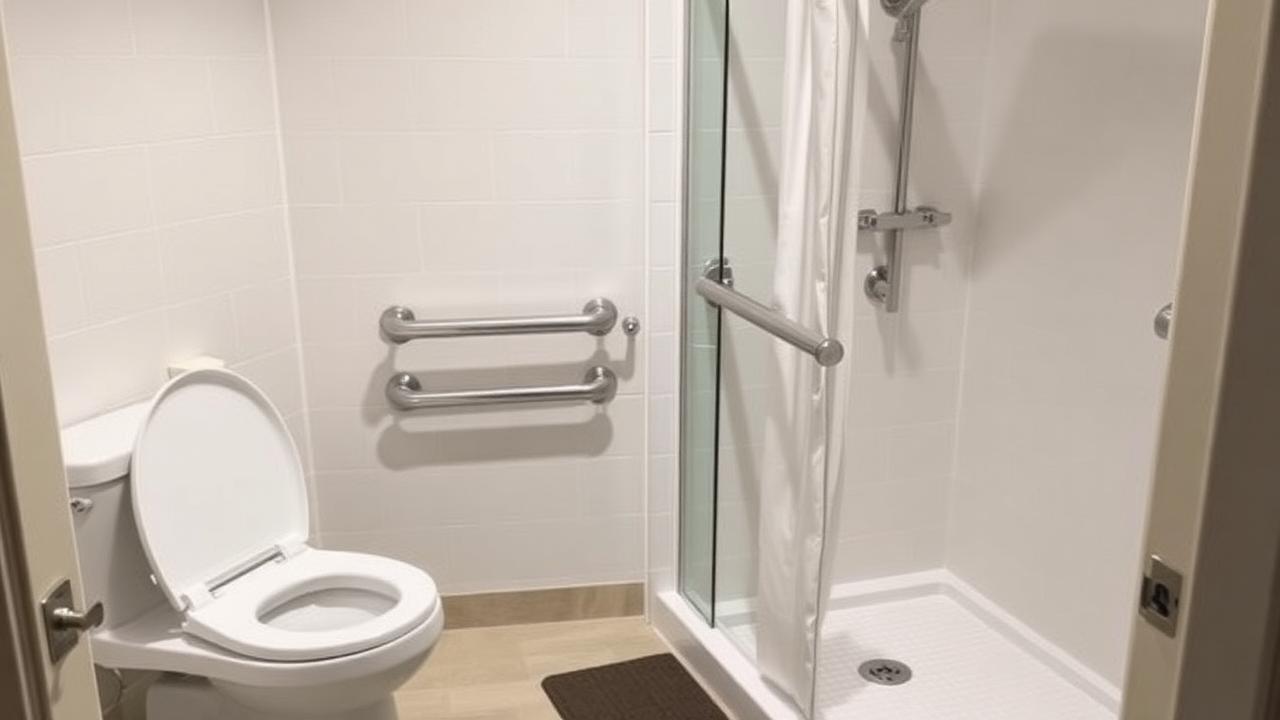
Install grab bars next to the toilet (on both sides if there is room) and inside the shower or tub area. Wall-mounted grab bars must be anchored into studs or backed with a solid mounting plate. Suction-cup grab bars are not designed to support full body weight and should not be relied upon as a primary safety device.
Non-Slip Surfaces
Place textured, non-slip mats or adhesive strips inside the bathtub and on the shower floor. The mat outside the tub should have a heavy rubber backing that keeps it firmly in place on wet tile. Avoid regular bath mats that can slide when stepped on.
Raised Toilet Seat
A raised toilet seat adds two to four inches of height, which makes sitting down and standing up considerably easier for people with knee pain, hip replacements, or general lower-body weakness. Some models come with built-in armrests for additional support.
Shower Chair or Transfer Bench
A shower chair or transfer bench allows the person to bathe while seated, which almost entirely eliminates the risk of slipping while standing on a wet surface. Transfer benches are especially useful for people who have difficulty stepping over the side of a bathtub.
Handheld Showerhead
A handheld showerhead on a flexible hose lets the person direct water exactly where it is needed, which is especially important when bathing from a seated position. Installation is usually as simple as unscrewing the existing showerhead and replacing it.
Adequate Lighting
Make sure the bathroom is well lit from the moment someone walks in. A nightlight for nighttime trips to the bathroom can prevent stumbling in the dark. Motion-sensor LED nightlights are inexpensive and turn on automatically when they detect movement.
Accessible Storage
Move shampoo, soap, and towels within arm's reach so the person does not need to stretch, bend, or twist to get them. A shower caddy at seated height is a simple fix that reduces reaching.
Use our Bathroom Safety Checker to evaluate your bathroom's current safety features and see which improvements would make the biggest impact.
Need Professional Home Care?
Professional home care agencies like a licensed home care agency can help assess your home's safety and provide personal care assistance during bathing and grooming.